The journalWine 101
How to taste a wine flight like you mean it
Written by Ashburn Wine Shop | Bar & BistroJuly 17, 2026 · 3 minute read
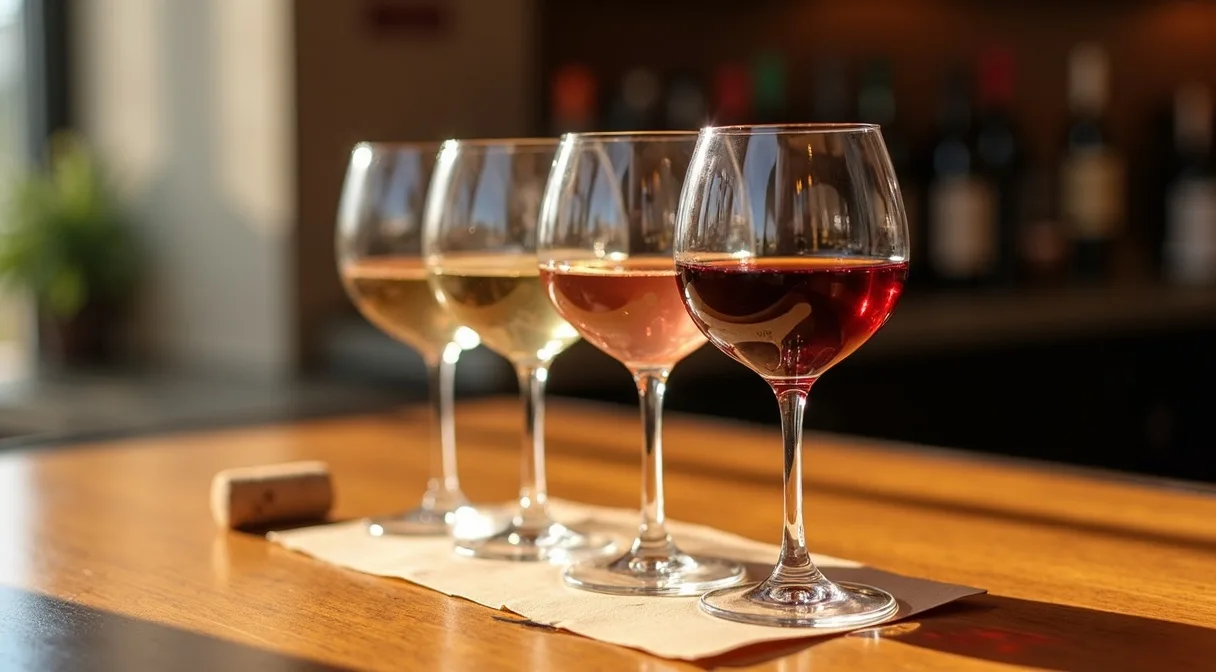
A flight is four small pours and a question: which one is yours? People treat it like a test. It isn't. It's the fastest wine education money can buy, and the whole method fits on an index card.
Our flights rotate every Wednesday at the bar, which means this is a skill you can practice a few minutes from your driveway. Here's how we'd walk you through it.
Work left to right, and slow down once
Flights are poured light to heavy on purpose. The sparkling or the palest white sits on your left, the biggest red on your right. Go left to right and every wine gets a fair hearing. Go the other way and glass four steamrolls everything behind it.
Before the first sip, do one slow lap. Look at the color. Give the glass a swirl. Put your nose in it, actually in it. The swirl isn't theater; it throws aromas up out of the wine, and smell is where most of what we call flavor actually lives.
Say what it reminds you of, not what it should be
There are no wrong answers at this part of the bar. If the Sauvignon Blanc smells like a freshly mowed lawn, say mowed lawn. If the red smells like your grandmother's cedar closet, say that. Naming a smell out loud is how your brain files it, and filed smells are how you start recognizing grapes across a crowded room.
Then sip. Hold it a beat before you swallow. Notice two things only: does your mouth water (that's acidity), and do your gums feel dried out (that's tannin). Everything else is decoration. A wine you keep thinking about after you've moved to the next glass is a wine you should take home.
The real trick is comparison. Build a flight at home.
One wine alone is hard to describe. Two side by side describe themselves. The cheapest masterclass we know is one grape from two places, and Sauvignon Blanc makes the loudest case.
Pour Villa Maria's Marlborough bottling next to St. Supéry's from Rutherford in Napa. The New Zealander pulls fruit from both of Marlborough's big valleys and jumps out of the glass with lemongrass, passion fruit and a flash of snap pea. The Napa wine is picked cold before dawn and raised in stainless steel, and it trades that green snap for grapefruit, gooseberry and a saline streak the Tasting Panel liked to the tune of 93 points. Same grape. Different hemispheres. Twenty dollars against twenty-five, and one tasting decides which camp you're in.
Round two: same grape, two personalities
Chardonnay is the other great argument starter. Trefethen grows theirs in Napa's Oak Knoll District, where cool air off San Pablo Bay keeps the wine on the Meyer lemon and crushed-stone end of the spectrum. It flatly refuses to be a butter bomb. Teeter-Totter comes from winemaker Benoit Touquette, a man with more than two dozen 100-point wines on his resume, and his everyday Napa white runs creamier: lemon curd, roasted hazelnut, oak used like seasoning instead of syrup.
Taste them together and you'll know your Chardonnay type for life. That's the whole flight trick. Comparison turns opinions into knowledge.
Or skip the home setup and come practice on ours. The Wednesday flight changes weekly, Wine 101 walks you through all of this with a guide and a full glass, and if you time it right you can roll straight from a tasting into trivia night. The calendar has it all.