The journalPicks & Pairings
What wine actually goes with a Virginia peach
Written by Ashburn Wine Shop | Bar & BistroAugust 17, 2026 · 3 minute read
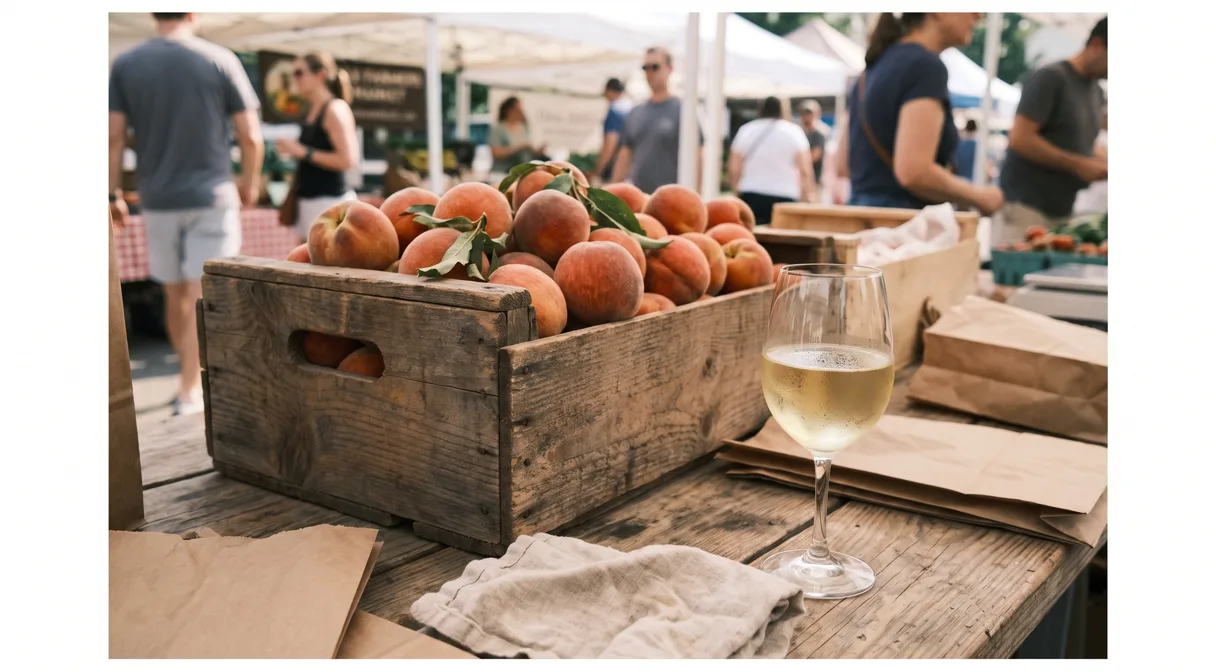
Virginia peach season runs from early July through late August, and right now the farm stands around Loudoun are stacked with them. Most of that fruit comes out of orchards in central and southwest Virginia, trucked up fresh a few times a week, which means the peach on your counter this week is about as good as it gets all year.
Peaches are a harder pairing than people assume. The sugar is real, the acid is real, and most wine either fights one or gets steamrolled by the other. A heavily oaked Chardonnay tastes like a different food group next to a ripe peach. A bone-dry, high-acid white just tastes sour by comparison. The wines that actually work share one thing: they carry their own stone-fruit character, so the glass and the plate say the same thing instead of arguing.
These three bottles do that, each for a different way you're likely to eat a peach this month.
Off the grill, reach for German Riesling
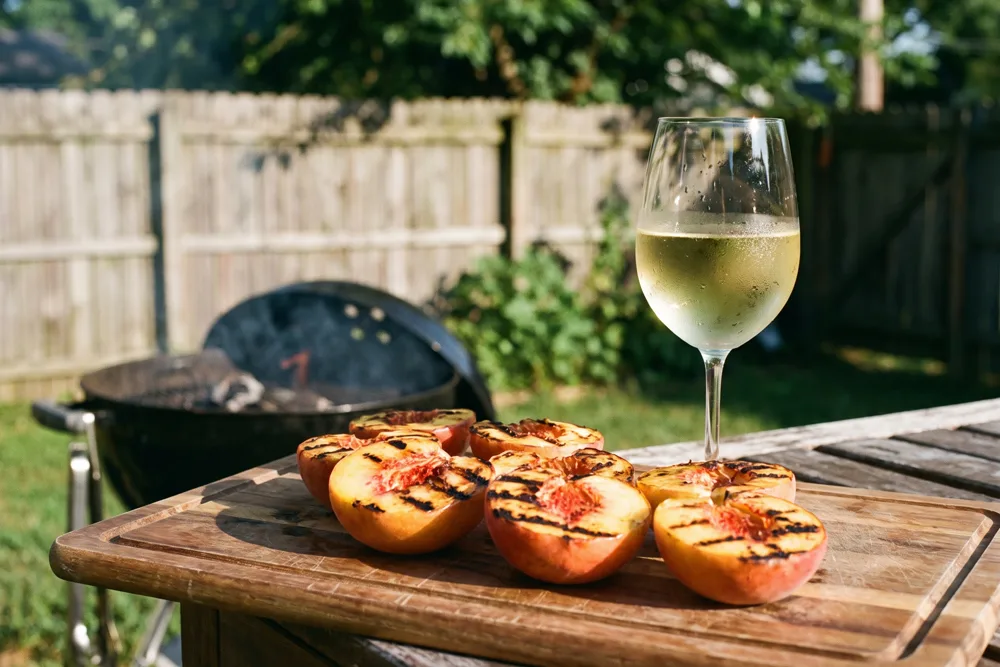
Grilled peaches want a wine with real sugar-acid tension, and Carl Graff's yellow-label Mosel Riesling is built for exactly that. The fruit comes off some of the river's most famous slate slopes, and the wine tastes like the produce aisle it's about to sit next to: apricot and peach up front, citrus zest and a little spice behind, a touch of sweetness kept honest by cold-river acidity.
This is a weeknight bottle, not a special-occasion one. Low alcohol, high refreshment, the kind of Riesling you open because the peaches looked good at the stand, not because you planned a menu around them. Char from the grill needs something with a little sweetness to answer it, and this Riesling has exactly enough.
Peach caprese and porch salads want the rosé
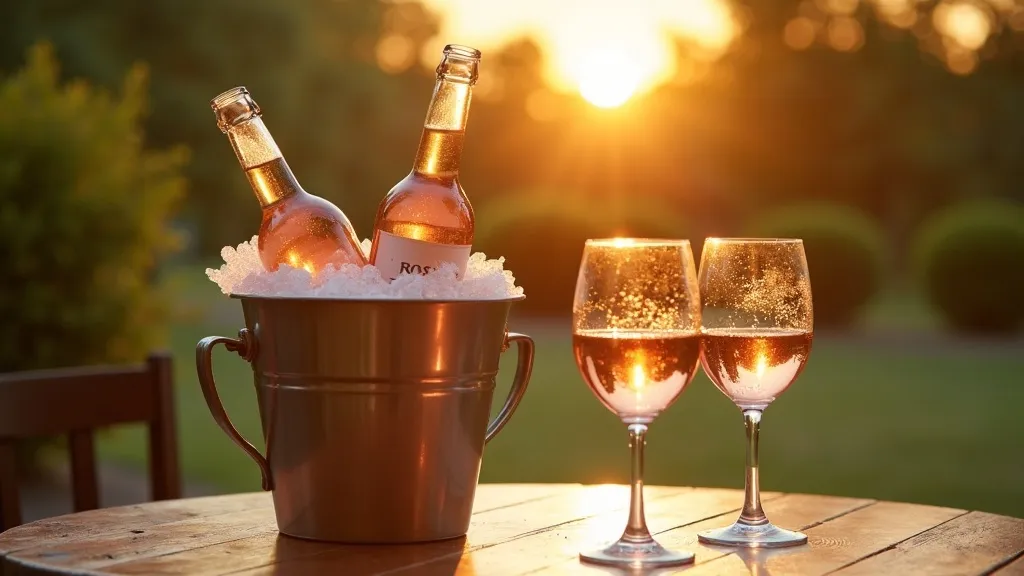
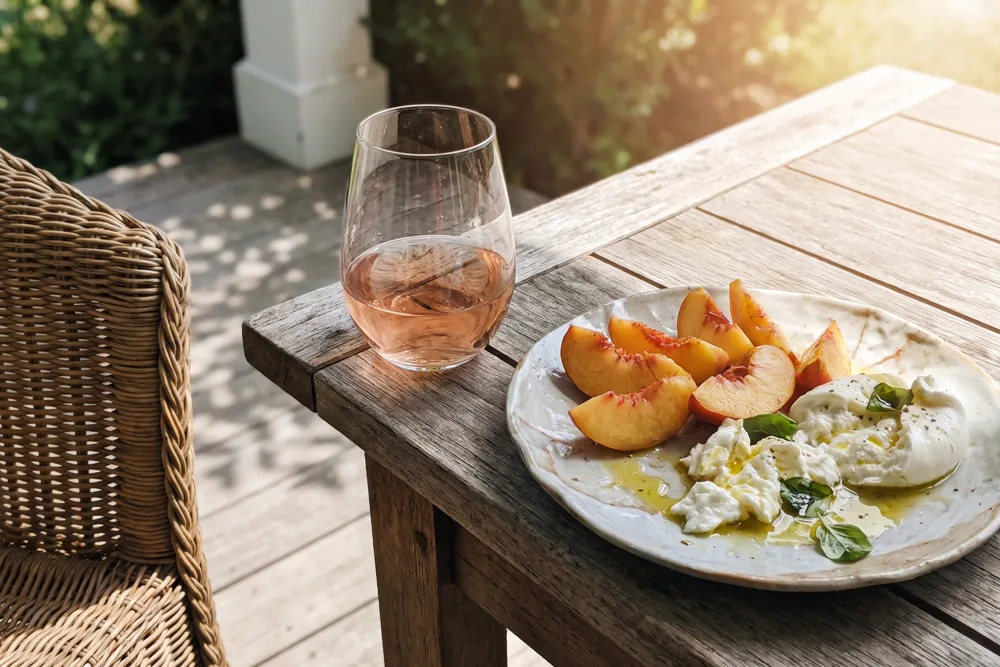
Cap au Large comes from the winegrowers of the Saint-Tropez peninsula, pressed gently and fermented cold to stay pale, light and dry. Crack it open next to a peach and watermelon, citrus and actual stone fruit show up in the glass, which makes this less a pairing exercise and more a repeat of what's already on the plate.
Serve it with a peach-and-burrata board, a porch salad with grilled peach and arugula, or nothing at all except good company. Chill it hard, pour it pale pink, and don't overthink the rest of the menu. This is the bottle for a Tuesday that turned into a longer evening than planned.
Skip the bar-cart bellini, pour this instead
Bailly Lapierre's Rosé Brut comes out of a cooperative cellar fifty meters underground in a medieval quarry outside Saint-Bris, the same stone that built the Pantheon and Notre-Dame. It's Pinot Noir with Gamay, briefly steeped for color and finished in the traditional method, with an actual mousse instead of forced bubbles and strawberry, cranberry and blood orange carrying the finish.
Pour it straight next to sliced peaches at brunch, or do the bellini anyway. This one can take the puree and still taste like something afterward, which is more than you can say for most prosecco poured for the same purpose. It is also the bottle to bring when the occasion is good news, not just a Tuesday.
The short version
Grilling the peaches: German Riesling. Eating them raw with cheese and salad: dry rosé. Making a brunch out of it: the Crémant. All three share the same logic: a wine with its own peach character beats a wine that's just technically dry and cold.
Farm stand peaches don't last, and neither does August. Grab a bottle on your way to pick some up, or grab all three and work through the lineup before the fruit disappears for the year.