The journalWine 101
Natural wine, explained without the mysticism
Written by Ashburn Wine Shop | Bar & BistroAugust 31, 2026 · 3 minute read
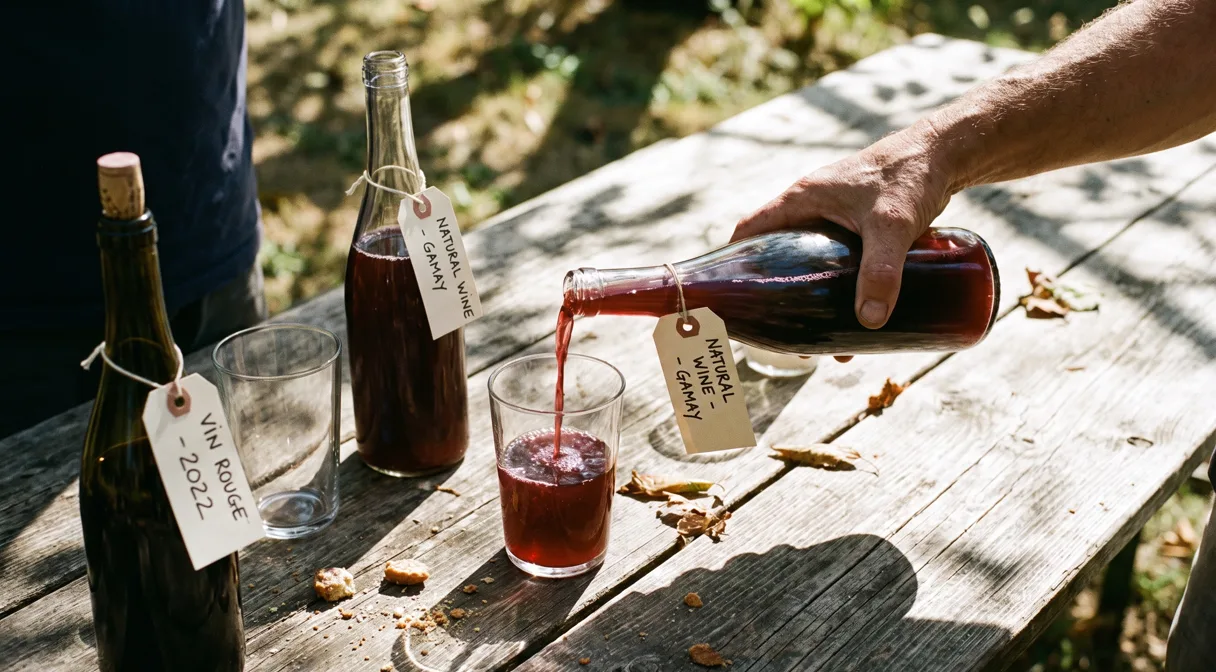
Natural wine means less than people think and more than a marketing word. Strip out the group chats and the orange-wine Instagram accounts, and the actual definition is narrow: grapes farmed without heavy chemical inputs, fermented with the yeast already living on the skins instead of a commercial strain, bottled with little or no added sulfur dioxide and no other additives.
That's it. No law enforces the term the way it enforces "Champagne" or "Napa Valley," so two bottles both calling themselves natural can taste completely different. What they share is a winemaker choosing to do less, on purpose, and living with the risk that comes with it.
What actually changes in the glass
Native yeast ferments slower and less predictably than a lab strain bred for a clean, consistent result. That unpredictability is the point. It can produce more texture, more savory and funky notes, sometimes a faint cloudiness or a slight fizz from residual carbon dioxide that a filtered, commercial wine would never show.
Sulfur dioxide is the other half of the story. Conventional wine uses it as a preservative and antioxidant, in small, regulated amounts that most drinkers never notice. Skip it, or use a fraction of the usual dose, and the wine becomes more volatile. It can shift in the bottle over a few years in ways a heavily sulfured wine won't. That's a real tradeoff, not a flaw to apologize for: you're trading shelf stability for a wine that tastes more like where it came from and less like a formula.
None of this means natural wine is automatically better, or that conventional winemaking is a shortcut. Plenty of the best bottles on our shelves are made conventionally, with careful, controlled sulfur additions and cultured yeast, because that's the right call for that fruit and that winemaker. Natural winemaking is one more set of tools, not a moral upgrade.
Our case study: a Syrah that says "Natural" on the label and means it
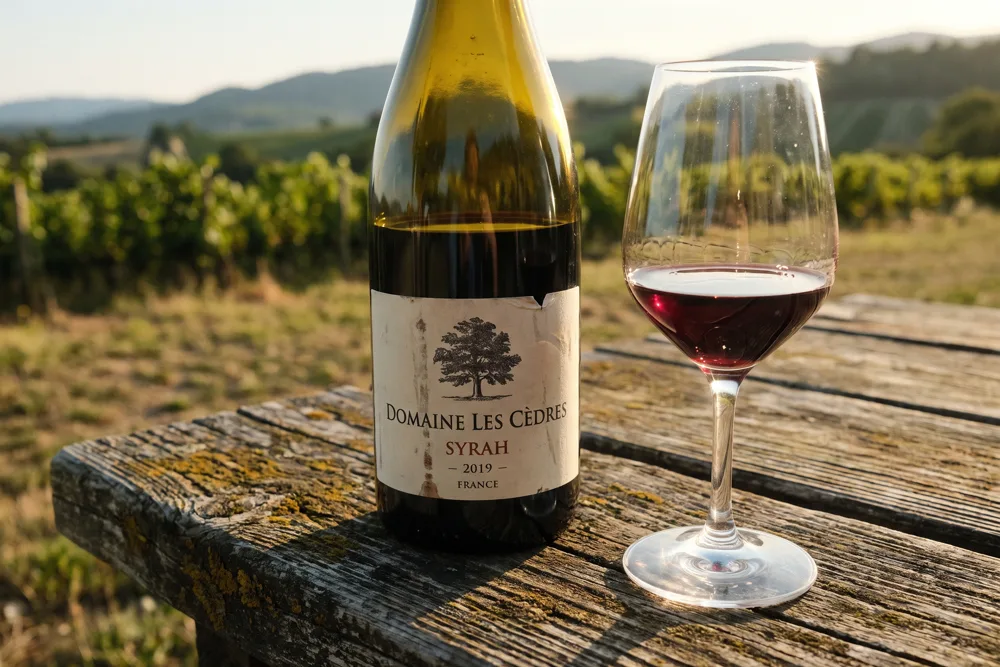
Mas Amiel farms the schist hills of Maury, in French Catalonia, organically and biodynamically, and built an entire range around doing less to the wine once it's picked. The Natural Syrah comes off a single parcel called La Deveze, on calc-schist soil, vinified with no sulfites and no other winemaking additives of any kind.
The result is smoky and glossy rather than funky or cloudy, which is the whole argument against assuming "natural" always means a vinegar-adjacent experiment. Dark red with violet edges, smoke giving way to peony, blackberry and black cherry, a long and faintly salty finish. Chill it fifteen minutes before pouring. It disappears fast at a table.
The gateway bottle: skin contact without the funk tax
If Mas Amiel is the full definition, Montecappone's Rosso Piceno is the easier on-ramp. The Bomprezzi-Mirizzi family ferments Montepulciano and Sangiovese separately in concrete with extended skin contact and no oak, a traditional Marche technique that predates the natural wine conversation by decades. It isn't labeled natural and doesn't need to be. It shows what skin contact alone does to a wine: more grip, more savory depth, texture you can feel on the gums before you notice what it tastes like.
Crushed stone and dusty florals over wild strawberry, a silky palate with real acidity. This is the bottle to hand someone who says they're "not really into natural wine" without starting an argument about labels.
Why this matters more than the word suggests
Every wine on our shelf gets tasted before it earns shelf space, natural label or not. We don't stock a bottle because it's trendy. We stock the ones that taste good and have an honest story behind the bottle, and increasingly that story includes a winemaker choosing to intervene less. That's worth knowing, and it's worth tasting for yourself instead of taking anyone's word for it, ours included.
If you want to taste the difference side by side, start with these two. Pour the Montecappone first, then the Mas Amiel, and notice how differently 'less intervention' can show up in the glass depending on the grape, the soil and the winemaker's hand.