The journalEntertaining
What to pour for Loudoun's first chilly nights
Written by Ashburn Wine Shop | Bar & BistroOctober 7, 2026 · 6 minute read
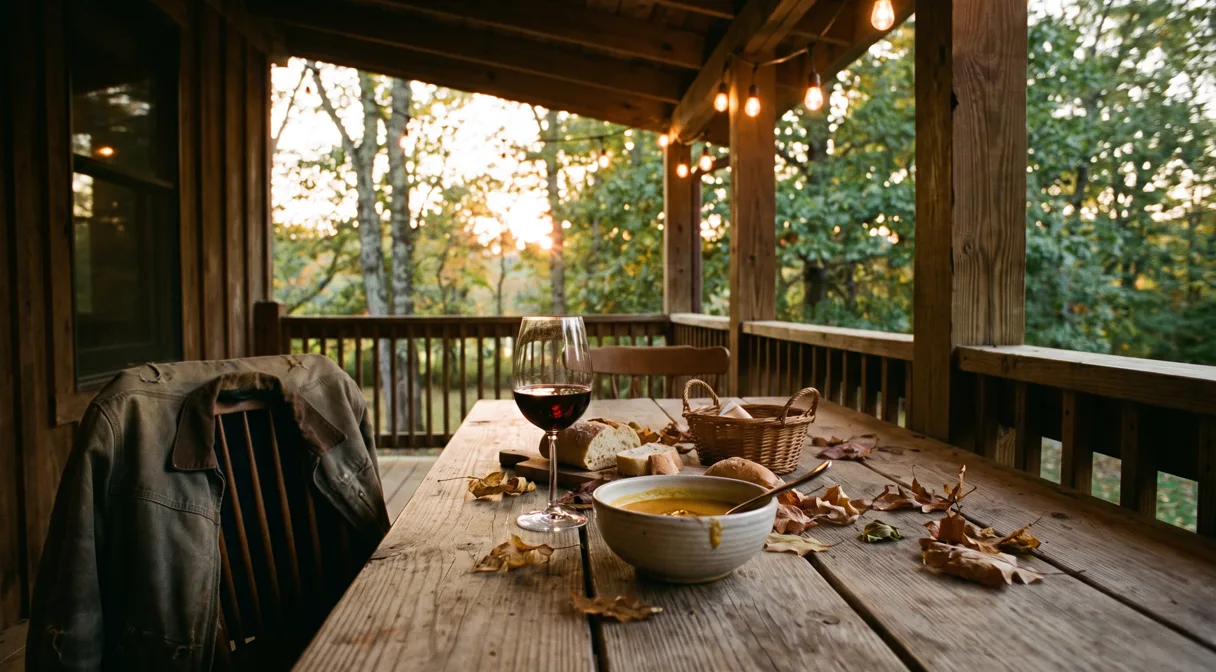
There's a specific week every October when Northern Virginia stops pretending it's still summer. The AC goes off at night, the farmers markets swap peaches for apples and squash, and the wine that felt right in August starts tasting thin against what's actually on the stove. This is that week.
You don't need to overhaul the whole wine rack. Three bottles cover the entire shift: a white that can handle roasted vegetables without disappearing, a lighter red for the in-between nights, and a heartier pour for when the oven's been on since four o'clock.
Apple season in Northern Virginia runs through October and into November, right alongside pumpkin patches and the first proper chili weather, and most of what changes on our own menu and in our own glasses this time of year tracks that shift more than it tracks a specific date on the calendar. The wine rules below follow the same logic: cook heavier, pour heavier, and don't force a summer wine to work against food it was never built for.
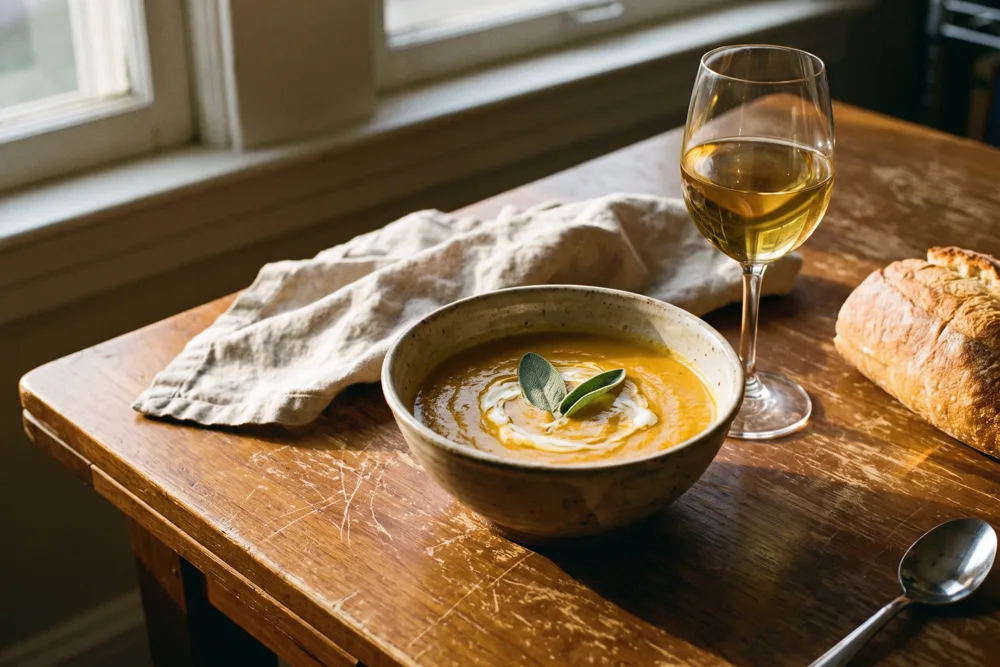
Butternut squash soup wants this Chardonnay, not a crisp Sauvignon Blanc
Teeter-Totter is winemaker Benoit Touquette's everyday Napa project, and it exists specifically to argue against the idea that Napa Chardonnay has to taste like liquid butter. All Napa Valley fruit, a sane 13.3% alcohol, oak used like seasoning instead of syrup. Golden apple, lemon curd and grilled pineapple over brioche and roasted hazelnut, with baking spice running underneath.
That baking-spice note is exactly what a crisp, high-acid white can't offer against roasted squash, pumpkin soup, or anything with nutmeg or cinnamon already in the dish. You want a wine with a little weight and a little warmth to match the food, not one that gets steamrolled by it. This is a cult-wine winemaker's resume applied to a Tuesday-night price, which is the whole point of the project.
The oak question matters more here than people think. A heavily oaked Chardonnay next to a delicate soup can taste like vanilla frosting poured over vegetables, which is exactly the reputation that's kept a lot of good drinkers away from Napa Chardonnay entirely. Teeter-Totter's whole identity is proving that reputation wrong without swinging all the way to an unoaked, steely style that would undersell a dish this rich. It sits in the middle on purpose.
If squash soup isn't on your menu, the same bottle covers roast chicken with root vegetables, a mushroom risotto, or a Thanksgiving table a few weeks out. Buy a case now if you host in November. You'll use it.
For the nights still warm enough for the patio heater
Grenache is one of the most underrated grapes for this exact in-between stretch of weather, because it carries real fruit weight without the tannic grip of a young Cabernet. It reads as substantial enough for a cooler night, but it doesn't need decanting or ceremony, which matters on a Tuesday when you just want dinner and a glass of something that fits the mood.
Early October in Loudoun is rarely committed to the cold. One night calls for a sweater, the next you're back out on the patio with the heater running. Teneral Cellars' Grenache is built for exactly that split personality: full-bodied enough for a cooler evening, bright enough to still work if the patio heater's doing its job.
Teneral is a women-owned California label founded in 2020 by Jill Osur, and ten percent of profits go to organizations supporting women in the wine industry, which is a better reason to buy a bottle than most marketing copy ever gives you. Pour it with roast chicken, mushroom flatbread, or whatever's coming off the grill on the last warm weekend of the year.
Teneral also makes a point of transparency most wineries skip: Osur publishes where the profit-sharing goes and how much, rather than leaving it as a vague label claim. For a thirty-dollar bottle that drinks well above that price, knowing the business behind it is actually run the way it says it is counts for something.
Once the oven's been on all afternoon, pour the Rioja

There's a specific kind of fall cooking that takes hours: a braise, a slow-roasted chicken, anything with root vegetables that needed the whole afternoon to soften. Goros Tempranillo is the bottle to open once that kind of cooking is actually happening in your kitchen. Twenty-year-old vines on clay-limestone soil in Rioja, native-yeast fermented after a brief cold soak, six months in used French barriques with minimal sulfur added.
Toast, smoke and baking spice on the nose, soft cherry and plum underneath, real structure without the heavy oak-and-vanilla gloss a lot of Rioja leans on. James Suckling gave it 91 points, and more usefully, it's the kind of red that gets better over the hour it takes your braise to finish, not worse.
Native yeast fermentation, which we wrote about last month, is part of why this Rioja tastes less like a template and more like a specific place. The minimal sulfur approach means less of the heavy vanilla-and-oak gloss that mass-market Rioja leans on to standardize flavor across vintages, and more of whatever that particular year on clay-limestone soil actually produced. Vintage variation is a feature here, not a flaw to smooth over.
This is also the bottle to have on hand for an actual dinner party built around a braise, since it's sturdy enough to stay interesting through a long meal without needing to be the most expensive thing on the table. Pair it with the short ribs, then pour the rest of the bottle the next night against leftover braise reheated on the stove. It holds up both nights.
Fall is also when our own calendar gets busier
October and November are our heaviest stretch for tastings and wine dinners, timed on purpose to match the heavier cooking everyone's doing at home anyway. If you'd rather taste the shift from summer wine to fall wine with us instead of guessing at home, that's exactly what our Wine 101 sessions and seasonal wine dinners are built for.
We also run trivia and a paint and sip most weeks through the fall, which is a lower-commitment way to end up with a glass of something seasonal in your hand without planning a whole dinner around it. Check the calendar before you lock in weekend plans.
The actual rule for the next six weeks
Match the wine to the cooking method, not just the season. A quick weeknight dinner in October can still want something lighter, and a long Sunday braise in late September can already want the Rioja. Pay attention to how long something's been on the stove or in the oven more than what the calendar says, and the pairing mostly takes care of itself.
We'll be pouring versions of all three at the bar as the weather turns, and we're always happy to talk through what's actually in your oven that night before you buy anything. Come find us, or catch one of the tastings on the calendar this month.