The journalEntertaining
How to host a wine tasting without turning it into homework
Written by Ashburn Wine Shop | Bar & BistroSeptember 14, 2026 · 4 minute read
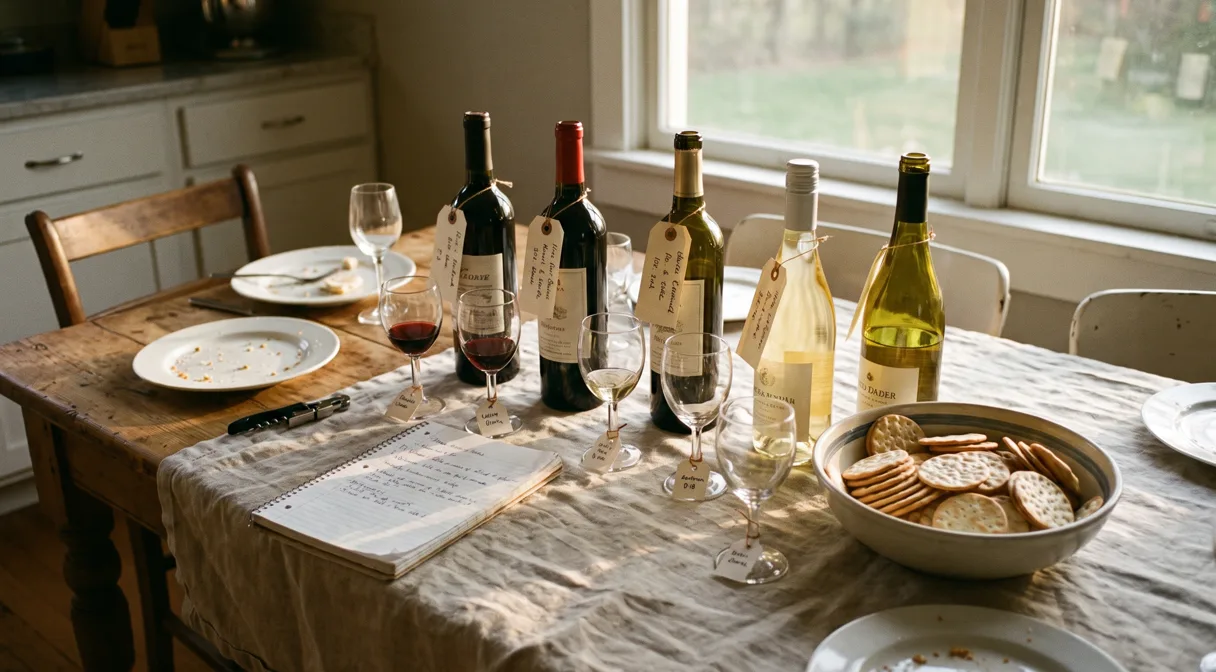
A home wine tasting goes wrong one of two ways. Either it's too loose, four bottles opened with no plan and everyone just drinking whatever's closest, or it's too formal, spit buckets and tasting sheets that turn a Friday night into a community college elective. The fix is a light structure: four wines, one simple progression, and permission to talk about the wine however you actually talk, not how a sommelier does.
Here's the format we'd run ourselves, with four bottles from our shelf that make the progression easy to follow even if nobody at the table drinks wine seriously.
None of this requires special glassware, a theme, or advance homework from your guests. The format does the work. You just need four bottles poured in the right order and a few prompts ready so the conversation doesn't stall out at 'yeah, it's good.'
Set the order before anyone opens anything
Light to heavy, dry to sweet, cheap to expensive: pick one rule and stick to it, because tasting a big red first ruins your palate for anything delicate that follows. For a four-bottle lineup, go sparkling, then white, then rosé, then red. Pour small, an ounce or two per wine, not a full glass. The point is tasting four wines, not finishing four glasses.
Set out some plain crackers or bread and a pitcher of water. Both exist to reset the palate between pours, not to be a meal.
If someone in the group doesn't drink, don't make them the designated note-taker by default. Give everyone a small notecard and let people jot down one word per pour. Comparing notecards at the end is half the fun and takes the pressure off anyone worried about sounding uninformed.
Pour one: Mas Fi Cava, to wake everyone up
Start with something with bubbles and a low bar to clear. Mas Fi is traditional-method Cava from the Josep Masachs cellars in Penedès, aged ten months on the lees for fine bubbles and a little bakery character. It drinks crisp, dry and clean, which makes it an easy opener nobody has to think hard about.
Ask one question at this pour: does it taste dry or sweet to you? That's it. You're not grading anyone, you're getting people talking before the wines get more interesting.
Pour two: a Riesling that argues with itself
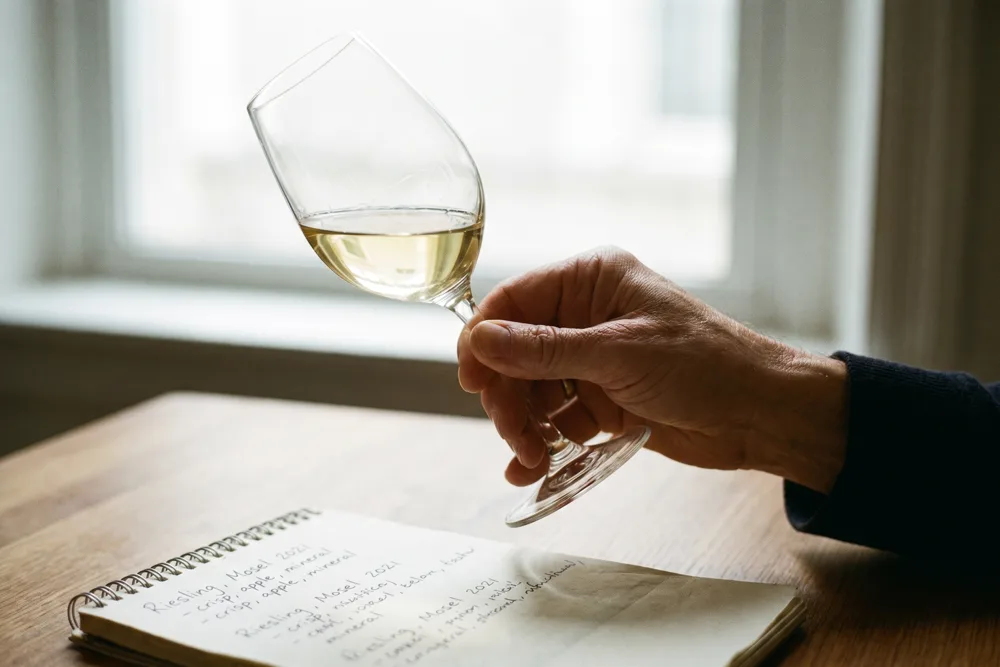
Carl Graff's Mosel Riesling is the pour that teaches the most in one glass, because it's simultaneously sweet and tart, and most people have never noticed a wine do both at once on purpose. Apricot and peach up front, citrus zest and a little spice behind, a touch of sweetness kept honest by cold-river acidity.
This is where the conversation usually gets interesting. Ask people to name one fruit they taste. There's no wrong answer, and disagreement here is the fun part, not a problem to resolve.
Pour three: a rosé with a real backbone
Cap au Large is paler and drier than most people expect from a rosé, built from Syrah, Grenache and Cinsault on the Saint-Tropez peninsula, pressed gently and fermented cold. Small red berries on the nose, watermelon, citrus and peach in the mouth, a clean and brisk finish.
This pour works as a bridge between the whites and the red that's coming. Ask whether it tastes closer to the Riesling or to what they'd expect from a red wine. People usually surprise themselves with the answer.
Pour four: a Rioja that explains itself
Finish on Bagordi's Barón de Pardo, a Rioja Crianza from a fully organic, family-run estate, mostly Tempranillo with a touch of Mazuelo and Graciano, aged twelve months in French oak. Deep cherry red, ripe red fruit, vanilla and cinnamon from the oak, a streak of roasted coffee underneath.
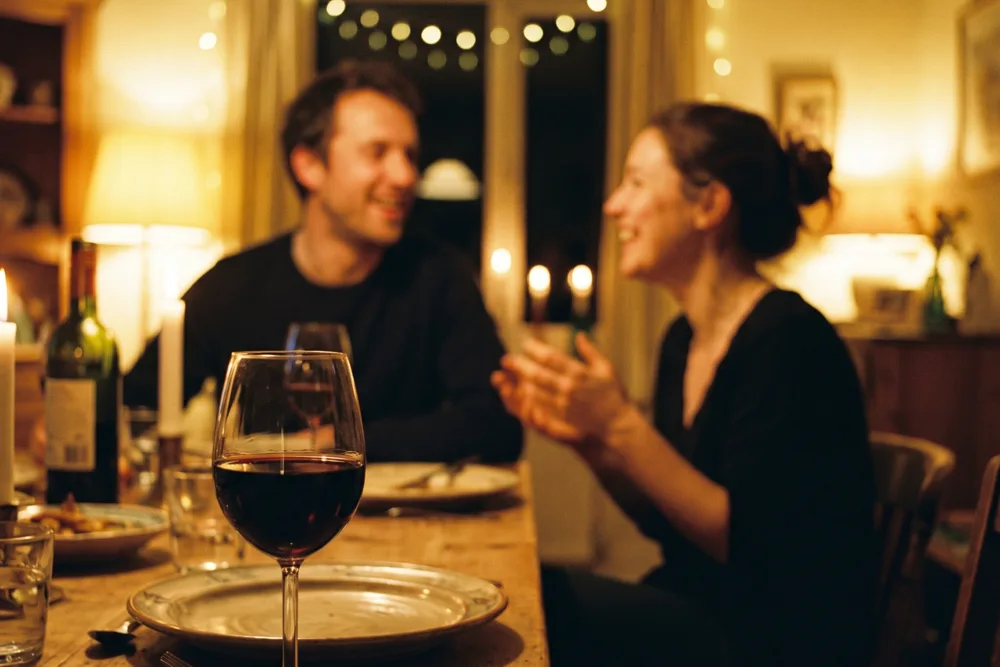
This is the pour to let run long. Red wine opens up in the glass over fifteen or twenty minutes in a way sparkling and white wine mostly don't, so pour it, keep talking, and taste it again at the end of the night. Most people notice the difference without being told to look for it.
What this costs and how far it stretches
All four bottles run just over a hundred dollars total, which works out to roughly fifteen dollars a head for a party of seven if everyone gets a real pour by the end, closer to eight a head for a bigger group doing smaller tasting portions. That's a cheaper night than most restaurant happy hours, and it comes with a better story.
Each bottle also holds up fine on its own if the full four-wine lineup is more than you want to commit to. Start with just the Riesling and the Rioja if you want a two-wine version: one white, one red, same light-to-heavy logic, half the shopping list.
The only real rule
Nobody has to use the word "tannin" correctly to have an opinion worth sharing. The entire point of a format like this is giving people permission to notice something specific, not training them to sound like a somm. If everyone leaves with one wine they'd buy again, the night worked.
Grab all four bottles from us, or build your own four-wine progression off our shelf. Either way, come tell us which pour won the room. We keep a running tally at the bar, and it changes more than you'd think.